Panel sessions

1. DC in China

Organizer: Prof. Yubo Yuan

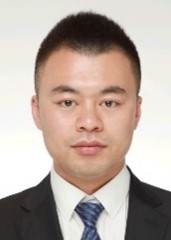
Panel 1 Speaker #1
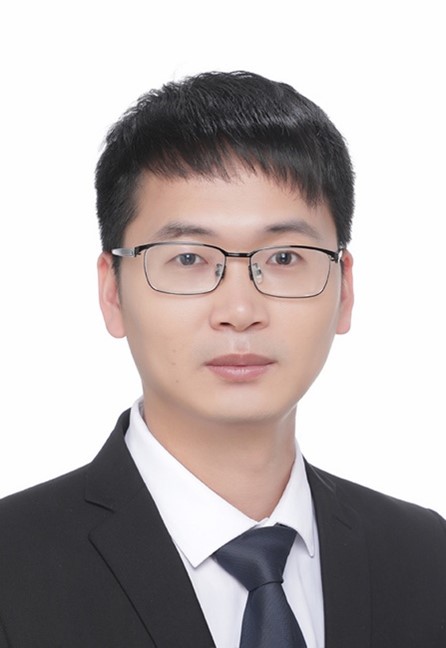
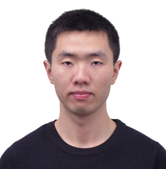
Prof. Bin Hao

Prof. Bin Hao

Beijing University of Civil Engineering and Architecture, China

Topic

Research and Application of LVDC in buildings in China

Abstract

TBD

Bio

Bin Hao, a professor at Beijing University of Civil Engineering and Architecture, has been engaged in research and application work in areas such as PV-energy-storage-DC-flexibility, DC microgrids, building energy conservation and green buildings, and renewable energy applications in buildings for a long time. He has successfully led and participated in over 50 national key research and development projects under the "14th Five-Year Plan" and "13th Five-Year Plan", as well as various other scientific research projects including those from the Ministry of Housing and Urban-Rural Development and the Ministry of Finance for renewable energy building applications, and energy-saving and land-saving special projects of the Ministry of Housing and Urban-Rural Development. These include 10 national key research and development projects, 13 international cooperation projects, and 20 provincial and ministerial-level projects. He has also compiled 3 engineering standards, participated in the compilation of 17 others, and published over 50 papers. He has received provincial and ministerial-level awards, including the first prize of "Huaxia Construction Science and Technology Award", three second prizes, and two third prizes. The team he led has been honored with the title of "National Advanced Collective for Energy Conservation" during the "11th Five-Year Plan".
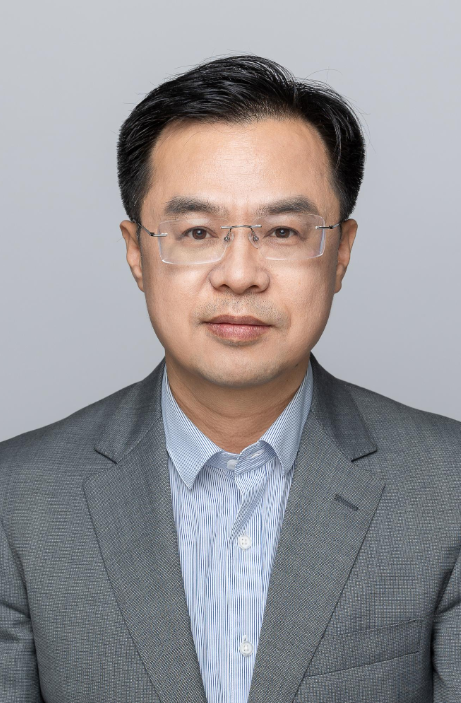
Panel 1 Speaker #2
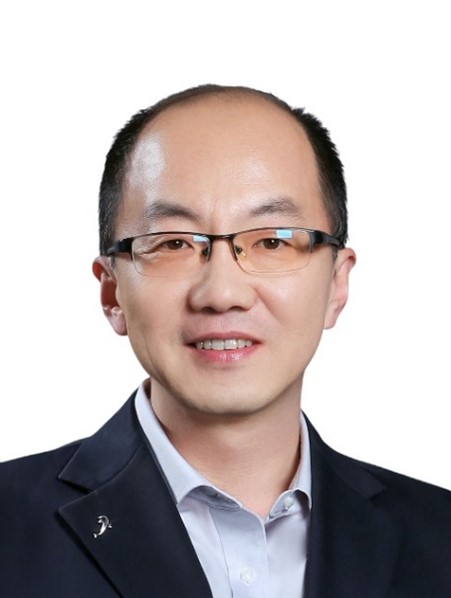
Dr. Yi Bao

Dr. Yi Bao

Vice President VNET Group, Inc, China

Topic

Era of Hyperscale 2.0 New Compute Power Infrastructure Innovation and Practice

Abstract

TBD

Bio

Yi Bao, PhD, Senior Vice President of 21Vianet Group, and General Manager of the Energy Innovation Business Department. Mainly engaged in research on innovative projects for green and low-carbon new infrastructure. Previously worked at the EPPEI and the National Electric Power Planning Research Center, participating in multiple national energy plans such as the national power "14th Five-Year Plan", the energy storage "14th Five-Year Plan", and the Shagohuang New Energy Base. Published more than 10 international top-tier papers. Led multiple collaborative projects in computing and power, including the National Development and Reform Commission's green and low-carbon demonstration project - the Ulanqab source-grid-load-storage integration project and the Taicang green and low-carbon economic innovation base. Has extensive experience in data centers and energy planning.

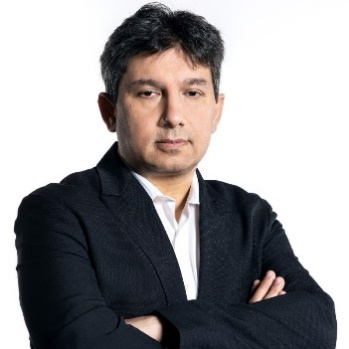
Panel 1 Speaker #3
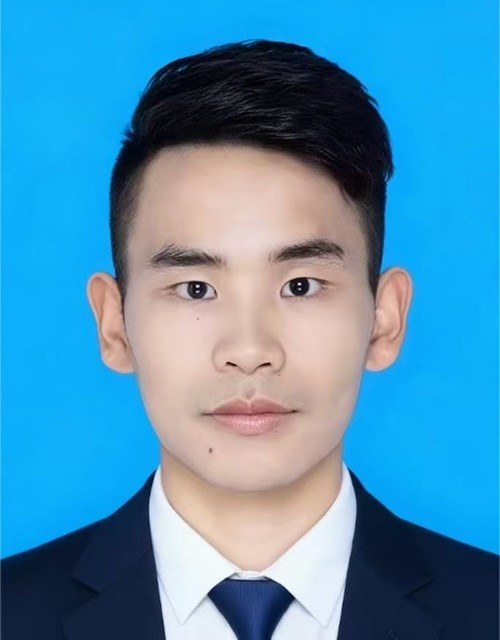
Mr. Wenbo Chen

Mr. Wenbo Chen

CEO

Golden Corporate, China

Topic

Research and Configuration of Protection for LVDC Distribution Systems

Abstract

TBD

Bio

Chen Wenbo, the chairman of Golden Cooperate Information & Automation Technology (Nanjing) Co., Ltd, is a senior engineer. He serves as the vice chairman of the IEEE PES DC Power System Technical Committee (China) Low Voltage DC Technology Subcommittee, an expert in the IEC TC8/JWG9 (Low Voltage DC Distribution) working group, a member of the National Power System Substation Low Voltage Power Consumption Standardization Working Group (SAC/SWG21), a member of the CIGRE C6 China Special Committee, a member of the CIRED China Special Committee, the vice president of the 8th Council of the China Rural Energy Industry Association, a member of the China Electricity Council DC Distribution Standards Committee, and the deputy director of the Power Quality Special Committee of the China Power Supply Society. He has been engaged in the research and development of low-voltage DC distribution and voltage sag management for over 20 years. He holds over 60 national patents related to voltage sag management and customized power, and has published more than 40 articles and papers in domestic and international professional journals on voltage sag management, AC/DC hybrid power supply, intrinsically safe DC systems, and active protection of DC systems. He has won 11 provincial and ministerial-level science and technology progress awards and participated in the formulation of 5 standards. His main research focus is on low-voltage DC distribution networks and high-reliability power supply technologies.

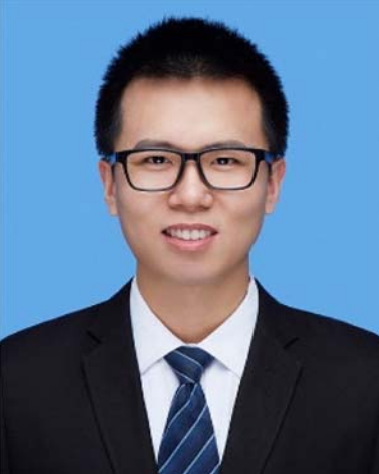
Panel 1 Speaker #4
Prof. Biao Zhao

Prof. Biao Zhao

Tsinghua University, China

Topic

IGCT-based Flexible HVDC Technology

Abstract

TBD

Bio

Prof. Biao Zhao is a Tenured Associate Professor and Ph.D. Supervisor at Tsinghua University, where he also serves as the Vice Dean of Ziqiang College. His research interests focus on DC transmission and distribution systems and high-power power electronics. He currently serves as the Convener of IEC SC22F WG44. Prof. Zhao has served as the PI for more than 20 significant projects, including the National Science Fund for Excellent Young Scholars and the Young Scientist Project of the National Key R&D Program of China. He has authored over 100 SCI/EI papers and holds more than 50 authorized patents. His contributions to the field have been honored with multiple prestigious awards, including the First Prize of the Beijing Technological Invention Award, the First Prize of the CES Technological Invention Award, and the China Electric Power Excellent Young Scientific and Technical Talent Award.

2. Power Electronics for DC

Organizer: Prof. Jinjun Liu

Panel 2 Speaker #1
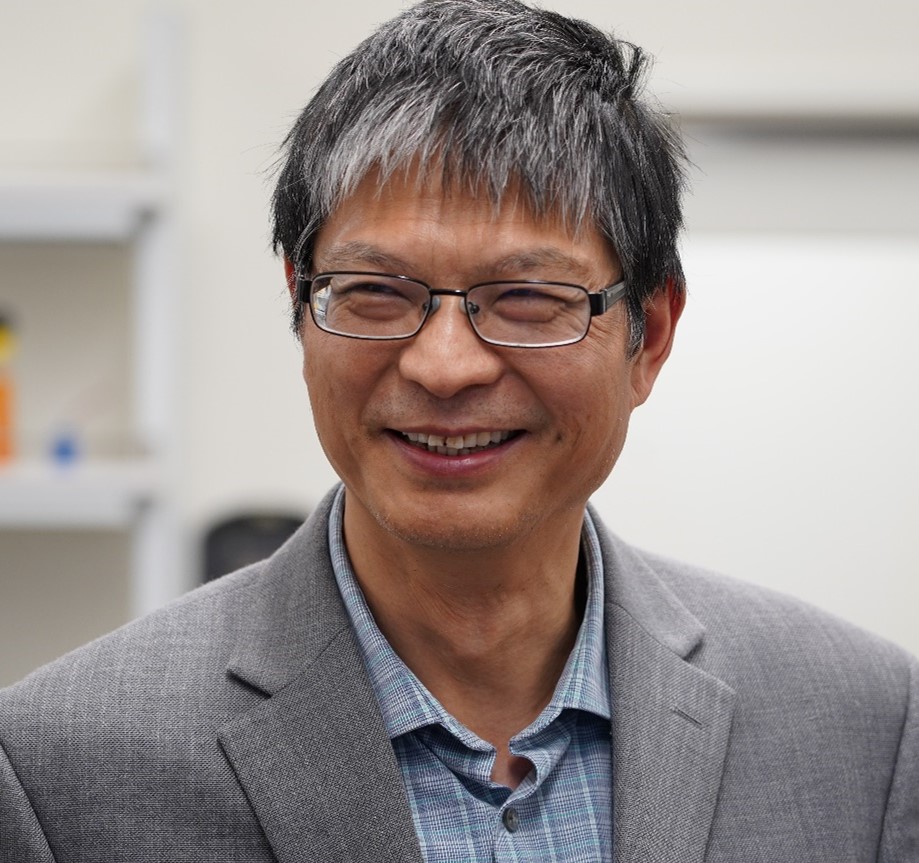
Prof. Chris Mi

Prof. Chris Mi

Fellow IEEE and SAE

San Diego State University, USA

Topic

When AI Meets Energy: How a variable air gap solid state transformer can change the landscape of AI data center power supplies

Abstract

AI data centers are projected to consume hundreds of terawatt-hours annually by 2035, demanding power conversion technologies that are not only energy-efficient but also cost-effective, scalable, and reliable. It is estimated that the global market for power supplies, distribution, and management systems serving AI data centers and cloud computing is expected to reach approximately $145-150 billion. Conventional line-frequency transformers and multi-stage AC-DC architectures suffer from low efficiency, bulkiness, high cost, low reliability, and limited dynamic response. To support the rapid growth of AI workloads and comply with emerging energy and environmental standards, innovative power electronics solutions are urgently needed. This presentation explores the development of a novel megawatt-scale, medium-voltage (MV) power conversion system based on a Variable Air Gap Solid-State Transformer architecture. The approach aims to reduce energy loss, footprint, and cost while enabling flexible, modular deployment, and achieving more reliable operation in large-scale AI data centers.

Bio

Dr. Mi is is a Distinguished Professor of Electrical and Computer Engineering at San Diego State University (SDSU), a Fellow of both IEEE and SAE, and the Director of Cali & Daniel Chang Center for Electric Drive Transportation at SDSU. He was previously a faculty member at the University of Michigan-Dearborn from 2001 to 2015, and an Electrical Engineer with General Electric from 2000 to 2001. He also served as the CTO of 1Power Solutions and EV Safe Charge. Dr. Mi received his Ph. D from the University of Toronto, Canada, in 2001. He is also the Co-Founder and CTO of Novos Power, a company focused on delivering power solutions for modern data centers with the highest efficiency, reliability, and lowest cost. Dr. Mi was ranked the top 1% highly cited researchers in the world by Clarivate in 2025, among the top 179 researchers in engineering world-wide to receive that honor. Dr. Mi has published five books and 370 papers. He served as Editor-in-Chief, Area Editor, Guest Editor, and Associate Editor of multiple IEEE Transactions and international journals, as well as the General Chair of over ten IEEE international conferences. Dr. Mi has won numerous awards, including the "Distinguished Teaching Award" and "Distinguished Research Award" from the University of Michigan, IEEE Region 4 "Outstanding Engineer Award," IEEE Southeastern Michigan Section "Outstanding Professional Award," and SAE "Environmental Excellence in Transportation (E2T) Award." He is the recipient of three Best Paper Awards from IEEE Transactions on Power Electronics and the ECCE Student Demonstration Award. In 2019, he received the Inaugural IEEE Power Electronics Emerging Technology Award. In 2022, he received the Albert W. Johnson Research Lectureship and was named the Distinguished Professor, the highest honor given to an SDSU faculty member, and only one award is given each year. In 2023, he received the IEEE PELS Vehicle and Transportation Systems Achievement Award, the IEEE Transactions on Industry Applications Best Paper Award, the SDSU Innovator of the Year Award. In 2024, he received the prestigious Alumni Distinguished Faculty Award from SDSU. Most recently, he received the Wang Family Excellence Award from the California State University System.

Panel 2 Speaker #2
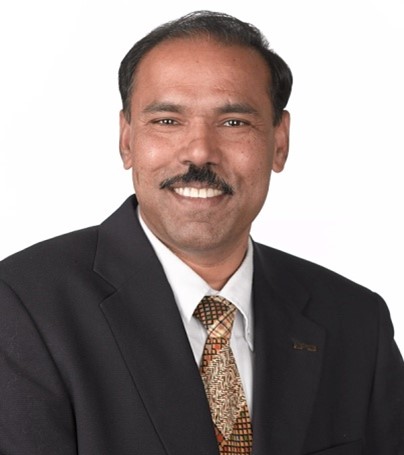
Dr. Ram Adapa

Dr. Ram Adapa

Fellow IEEE

Technical Executive, EPRI, USA

Topic

The Role of HVDC and Power Electronics in shaping the Future Electric Grid with Renewables

Abstract

It is anticipated that a significant number of High Voltage Direct Current (HVDC) systems and power electronics-based Flexible AC Transmission System (FACTS) controllers will be deployed across transmission and distribution networks to support the growing integration of renewable energy resources. According to Pike Research, HVDC transmission is emerging as one of the fastest growing segments in the utility sector. Cleantech Market Intelligence reports that cumulative global investments in HVDC systems from 2012 to 2020 reached approximately US $120 billion, with spending continuing to rise rapidly throughout the 2020s. While much of this growth is concentrated in countries such as China and India, HVDC adoption is also accelerating in Europe, North America, Australia, and other regions as utilities work to enhance renewable energy integration. This presentation highlights the state of the art in HVDC and FACTS technologies and explores new applications, including AC line conversion to DC and advances in converter designs such as modular multilevel voltage source converters (VSCs).

Bio

Dr. Ram Adapa is a Technical Executive in the Energy Delivery and Customer Solutions at EPRI. His research activities focus on High Voltage Direct Current (HVDC) transmission, Flexible AC Transmission Systems (FACTS), Custom Power, and Fault Current Limiters. Dr. Adapa joined EPRI in 1989 as a Project Manager in the Power System Planning and Operations program. Later he became Product Line Leader for Transmission, Substations, and Grid Operations where he developed the research portfolio and business execution plans for the Grid Operations and Planning areas. Some of the tools in this portfolio included market restructuring, transmission pricing, ancillary services, and security tools to maintain the reliability of the grid. Before joining EPRI, Dr. Adapa worked at McGraw-Edison Power Systems (presently known as Eaton's Cooper Power Systems) as a Staff Engineer in the Systems Engineering Department. Dr. Adapa received a BS degree in electrical engineering from Jawaharlal Nehru Technological University, India, an MS degree in electrical engineering from the Indian Institute of Technology, Kanpur, India, and a PhD in electrical engineering from the University of Waterloo, Ontario, Canada. Dr. Adapa is an IEEE Fellow and has been honored several times by IEEE for his outstanding contributions to the profession. He received the 2016 IEEE PES Nari Hingorani Custom Power Award and the 2023 IEEE PES Uno Lamm HVDC Award. He has authored or coauthored more than 130 technical papers and is an IEEE Distinguished Lecturer. He is an individual member of CIGRE and a Registered Professional Engineer.

Panel 2 Speaker #3
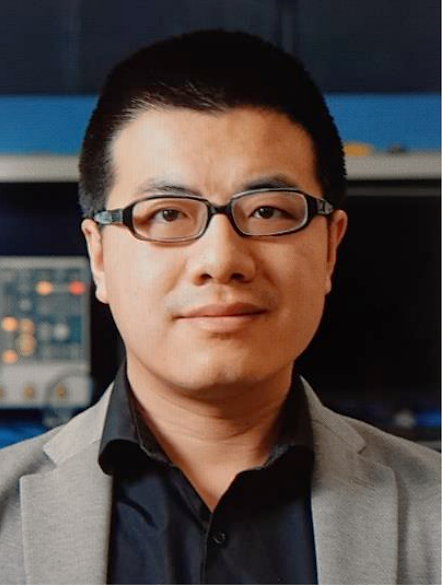
Prof. Dong Dong

Prof. Dong Dong

Virginia Tech, USA

Topic

Hybrid Modular-Multilevel Rectifier (HMMR) for MVDC Systems

Abstract

The rapid expansion of AI data centers, EV charging infrastructure, and renewable energy integration is driving strong demand for efficient, high-power-density power conversion from medium-voltage AC (MVAC) grids to medium-voltage DC (MVDC) and low-voltage DC (LVDC) distribution buses. Conventional solutions based on line-frequency transformers combined with low-voltage rectifiers suffer from large footprint, complex manufacturing, and limited controllability. State-of-the-art modular multilevel converter (MMC) approaches provide superior performance for MVDC applications, but at the expense of significantly increased cost and footprint. Modular solid-state transformer (SST) architectures offer built-in galvanic isolation; however, they face challenges related to insulation scalability and limited application flexibility.

This talk introduces the Hybrid Modular-Multilevel Rectifier (HMMR), a new family of power converter topologies designed to bridge the gap between performance and practicality in MVDC systems. HMMR architectures combine modular, scalable cell structures with hybrid switching networks to support both step-up and step-down AC-to-DC conversion across a wide voltage range - from distribution-level inputs (e.g., 4.16 kV, 13.8 kV) to target DC bus voltages suited for hyperscale data centers, solid-state transformer (SST) front ends, and DC microgrids.

The presentation reviews the HMMR topology family, discussing key variants optimized for different application constraints. Compared to MMC and other multilevel solutions, HMMR demonstrates compelling advantages in converter size, switching loss, and component count, translating to improved efficiency and reduced capital cost. The talk further addresses modulation strategies, wide-bandgap (SiC/GaN) device integration, fault tolerance, and scalability - with design case studies anchored in AI factory power architecture, 800 V DC distribution, and fast EV charging applications.

Bio

Dong Dong is an Associate Professor of Electrical and Computer Engineering at Virginia Tech, where he leads research in advanced power electronics for grid, data center, and transportation applications. His work spans wide-bandgap (SiC and GaN) device-based power conversion, high-frequency magnetic design, solid-state transformers (SST), dual active bridge (DAB) converters, and medium-/high-voltage systems including MVDC distribution and AI factory power architectures. Prior to joining academia, Prof. Dong was a power electronics engineer at GE Global Research, where he contributed to industrial and grid-scale conversion systems. He has authored or co-authored over 80 peer-reviewed journal papers, holds 37 U.S. patents, and has received multiple IEEE Prize Paper Awards. Prof. Dong is a Senior Member of IEEE and an active contributor to the IEEE Power Electronics Society. His current research interests include multilevel and modular converter topologies - including the Hybrid Modular-Multilevel Rectifier (HMMR) - high-density power conversion for hyperscale data centers, and the integration of wide-bandgap devices into MV power systems.

Panel 2 Speaker #4
Dr. Xiuda Ma

Dr. Xiuda Ma

HVDC/MVDC R&D Expert

NR Electric Co., Ltd., China

Topic

Resilience-Driven MVDC: Power Supply for Critical Industrial Facilities

Abstract

In recent years, Medium-Voltage Direct Current (MVDC) projects have been widely implemented across the world. For the power supply of critical industrial facilities including oil fields, hydrogen production facilities, and industrial plants, MVDC offers numerous advantages, such as flexible operation, isolation from the external power grid, controllable power flow, and low harmonics. This report will introduce the application background, technical characteristics, and system design of MVDC projects applied in critical industrial facilities. Additionally, it will present an overview of real engineering projects.

Bio

Dr. Xiuda Ma is an HVDC/MVDC R&D expert from NR Electric Co., Ltd., specializing in system design, control and protection, and grid-forming technologies for VSC-HVDC systems. With 9 years of hands-on engineering experience, he has played a key role in some landmark HVDC/MVDC projects, including Zhangbei DC Grid, Rudong Offshore wind farm HVDC and Suzhou four-terminal MVDC projects. He is currently serving as the project manager responsible for the wind-to-hydrogen MVDC project in Germany. His expertise lies in power electronics innovation, renewable energy source integration and resilience engineering.

3. Emerging DC Applications and Technologies

Organizer: Prof. Guobing Song

Panel 3 Speaker #1
Prof. Yi Wu

Prof. Yi Wu

Xi'an Jiaotong University, China

Topic

Research on DC Interruption Technology

Abstract

TBD

Bio

Yi Wu, a Professor and Ph.D. Supervisor at the School of Electrical Engineering, Xi'an Jiaotong University. He is a Leading Talent in Scientific and Technological Innovation of Shaanxi Province, a New Century Excellent Talent of the Ministry of Education, and a recipient of the National Science Fund for Distinguished Young Scholars. His research interests include power electronics and DC interruption technology, smart electrical apparatus and sensing technology, as well as fundamentals and applications of high-voltage discharge plasma. He currently serves as Deputy Secretary-General of the Low Voltage Apparatus Committee of the China Electrotechnical Society, an Editorial Board Member of Plasma Science and Technology, and a member of the International Scientific Committee for "Gas Discharges and Their Applications". He received his B.Eng. degree from Xi'an Jiaotong University in 1998, his M.Eng. degree from Shenyang University of Technology in 2002, and his Ph.D. degree in engineering from Xi'an Jiaotong University in 2006. He has served successively as Lecturer, Associate Professor, and Professor at Xi'an Jiaotong University since 2006. In the same year, he joined the research group led by Professor Mingzhe Rong to conduct research on DC interruption technology, which was largely underdeveloped worldwide at that time. In 2012, the team achieved a breakthrough in naval DC interruption technology and developed a DC circuit breaker with the world's highest breaking capacity at that time. This achievement met the urgent needs of major national engineering projects and was successfully applied in urban metro power systems, breaking the final technical barrier to the localization of urban metro electrical systems. Professor Wu has presided over 3 projects of the National Natural Science Foundation of China, 1 key research project of State Grid Corporation of China, and 2 national defense pre-research projects. His research achievements cover hybrid DC circuit breakers, protection of large-capacity DC distribution network equipment, and other related fields. He has received five awards at or above the provincial and ministerial level, including the Second Prize of the State Technological Invention Award (as the second completer) and the First Prize of the Shaanxi Provincial Science and Technology Award (as the first completer). He has published 15 representative SCI papers and holds 8 authorized invention patents.

Panel 3 Speaker #2
Dr. Waqas Arshad

Dr. Waqas Arshad

VP Microgrids Solutions – Product & Technology Head

Delta Electronics,USA

Topic

Emerging DC Applications: Challenges and Opportunities

Abstract

The transition toward DC-based power architectures is accelerating across modern energy systems, driven by the rapid growth of digital infrastructure, transportation electrification, and industrial decarbonization. Solid-state transformers (SSTs), as power-electronic-enabled interfaces, enable this transition by providing controllable AC/DC and DC/DC conversion, multi-port connectivity, and direct integration with DC-native sources and loads.

This paper focuses on three high-impact application domains. In hyperscale and AI-driven data centers, SST-enabled medium-voltage AC to high-voltage DC conversion supports emerging 800 VDC distribution, reducing multiple conversion stages and improving efficiency for high-density compute loads. In electric vehicle charging infrastructure, SST-based architectures directly interface medium-voltage grids with low-voltage DC outputs, enabling ultra-fast charging stations (>350 kW) with higher power density, modular scalability, and integration of on-site energy storage. In industrial electrification, SST-enabled DC microgrids provide direct coupling of distributed generation, battery storage, and high-power process loads, improving operational efficiency, reliability, and system controllability.

Across these applications, SSTs enable a common DC backbone that minimizes conversion losses, simplifies system architecture, and supports bidirectional energy flow between grid, storage, and loads. Regional deployment trends further emphasize application-driven adoption: in the United States, growth is led by data centers, EV charging hubs, and resilient microgrid solutions, while in China, large-scale development focuses on low-voltage DC distribution in buildings, industrial systems, and advanced DC power networks. Overall, SST-enabled DC architectures are emerging as foundational building blocks for next-generation power systems, particularly in applications requiring high efficiency, high power density, and seamless integration of renewable and storage resources.

Bio

Dr. Waqas Arshad joined Delta Americas as Vice President of Product and Technology, Microgrid Solution in November 2025. Waqas brings over 22 years of experience in the field of power electronics, electrical machines, and smart energy systems. Prior to joining Delta, he was with ABB, where he began his career in 2003 and held key technical and later leadership roles across corporate research, motion, and then electrification business areas. Since 2013, he has served in global leadership positions, with managing RnD teams in Americas, Europe, and Asia. Among other positions he also served as CTO of ABB's power conversion and later e-mobility business units. Waqas holds both an M.Sc. and a Ph.D. in Electrical Engineering from the Royal Institute of Technology (KTH) in Stockholm, Sweden. Born in Pakistan, he now resides in USA. In addition, he has lived in Sweden, Australia, and Mozambique. His hobbies include discovering new countries with family, playing cricket, and following current affairs.

Panel 3 Speaker #3
Dr. Xuanrui Huang

Dr. Xuanrui Huang

Project Manager

Beijing SIFANG, China

Topic

Discussions on Key Technologies of AIDC HVDC Power System

Abstract

TBD

Bio

Xuanrui Huang (Member, IEEE) was born in Xinjiang Province, China, in 1991. He received the B.E. and Ph.D. degrees in electrical engineering from Tsinghua University, Beijing, China, in 2013 and 2020, respectively. He is currently an engineer with Beijing Sifang Automation Company Ltd., Beijing. His research interests include permanent-magnet synchronous motor control, wave energy, and switched reluctance machines.

Panel 3 Speaker #4
Prof. Nihal Kularatna

Prof. Nihal Kularatna

Fellow IET

University of Waikato, New Zealand

Topic

Supercapacitor assisted power converters and protection systems for the future DC grids, DC homes and DC appliances

Abstract

Over the last two decades over 1200 companies employing more than 60,000 people have started manufacturing supercapacitors with an annual growth rate of around 2.8%. Traditional applications are to replace or supplement batteries, based on high power density of these devices with wider operating temperature ranges. Currently there are four to five different SC families and device capacitances vary from fractional farads to over 100,000 F per single cell. Over the past several years new materials such as graphene has become a new electrode material for better performance. Supercapacitors could be used not only in energy storage applications, but also in unique families of high-performance power converters and protection systems. When you treat the SCs as very long-time-constant devices and near-lossless voltage droppers a wider application area opens. This area is now identified as supercapacitor assisted (SCA) techniques. First successful example of applications is the SCA low dropout (SCALDO) regulator for high efficiency EMC free extra low frequency DC-DC converters. Second is the SCA surge absorber (SCASA) where a SC subcircuit could be combined with a coupled inductor and a MOV for repetitive surge absorption. Third is the SCA LED technique for DC lighting based on fluctuating DC supplies from renewable energy sources. Fourth is the SCA DC refrigerator (SCARef) for renewable DC operation of refrigerators based on SC energy buffering and DC-DC conversion eliminating the need for inverters and MPPT DC-DC converters etc. There are many other applications in the SCA family such as SCA transient energy pump for DC circuit breakers to eliminate high voltage DC power supplies and cryogenic cooling systems; SCA inverter (SCAInv) for reducing the losses in DC input loop of a solar inverter; SCA lossless DC transformer (SCAL2T) for step up and step down DC-DC converters for renewable energy DC systems at the low voltage end of the AC power grid. Seminar will present a designer's view of these SCA techniques, many of which have secured patents and some commercial implementations. Presenter will also touch on innovation and commercialization aspects of these techniques at the latter part of the seminar, which is based on over hundred IEEE and other publications.

Bio

Nihal Kularatna is an electronics engineer with four and half decades of contribution to profession and research. As a graduate electronic engineer, in his early career (1976-1982) he was active in aviation ground electronics, installing and commissioning navigation and communication systems. Latter part of his early career (1982-1985), he was a diagnostic and maintenance engineer in Middle East for first generation digital telecommunications with early cellular systems. During this early career, he won several ICAO fellowships for equipment-oriented training at Federal Aviation Academy (USA), Northrop Wilcox (US), Miami international airport, CIT Alcatel-France and several other European organizations. During his mid-career (1985-2002) at Arthur C Clarke Institute for Modern Technologies, he was active in industrial research and developing continuous professional development type training programs for practicing engineers, and in 1999 he was appointed as the CEO of the organization. During the 1990s, he was an active consultant for a few US companies, including the Gartner Group and Technology Dynamics, NJ. He moved to New Zealand in 2002, to accept a senior lecturer position at the Department of Electrical and Computer Engineering at Auckland University. In 2006 he moved to University of Waikato. In 2011 he was elected as an affiliated member of the Power Sources Manufacturers Association (PSMA-USA). He won the NZ Engineering Innovator of the Year 2013. In 2014 he was appointed the Vice Chair of the IEEE DC Energy Efficiency Committee. Nihal was spotlighted as a Featured Engineer for US electrical engineering website EE Web. He is currently active in research in non-traditional supercapacitor applications, power converters, transient propagation and power conditioning. He has contributed over 160 refereed papers to learned journals and international conferences. His work on supercapacitor assisted (SCA) techniques such as SCALDO, SCASA and SCATMA culminated numerous US, NZ and PCT patents. For an overview of his research leadership in supercapacitor applications, now internationally known as SCA techniques, feature article in June 2020 IEEE Industrial Electronics Magazine is suggested. He has authored ten reference books for practicing electronic engineers including the two consecutive volumes of IET Electrical Measurement Series and four Elsevier (USA) titles. As a passionate researcher and an academic, Dr Kularatna frequently delivers invited lectures, tutorials and workshops at IEEE conferences and PSMA events on power electronic subjects. He won the UoW Postgraduate Research Supervision Excellence Award in 2021.

4. International Standards and Engineering Practices

Organizer: Prof. Li "Lisa" Qi

Panel 4 Speaker #1
Dr. Antonello Antoniazzi

Dr. Antonello Antoniazzi

Corporate Executive Engineer

ABB, Italy

Topic

Enabling 800 VDC power distribution for AI data centers: the OCP Project.

Abstract

Direct Current has emerged as the key technology for meeting the extreme power demand of next-generation AI servers and racks. The necessary DC infrastructure, equipment, standards, and expertise are essential for massive deployment of AI factories. However, despite a very challenging timeline, many key aspects and the rationale for some choices remain unclear. The OCP Power Distribution project, resulting from a strategic partnership between Current/OS and ODCA, to represent the electrical industry, and OCP, to represent the data center industry, has been aimed to establish a common language and a shared consensus about basic concepts, such as architectures, voltage, earthing, protection and safety, and main components. The project has demonstrated feasibility of 800 VDC power distribution, explored various technical alternatives, analyzed their respective advantages and disadvantages, and identified remaining critical challenges. The results are reported in a whitepaper published in March 2026. The project is continuing, extending the coverage to new topics, such as EMC and control, and deep diving in certain aspects, e.g. the connection with racks. A new edition of the whitepaper is planned during the summer. The perspective is to develop technical specifications to ensure the interoperability of equipment.

Bio

Dr. Antonello has joined ABB in 1997. Currently, he is Corporate Executive Engineer at Electrification Smart Power Division, based in Bergamo, Italy, where he has been working in innovation projects, in particular for Direct Current applications. He is leading the Technical Committee of the Current/OS Foundation and a member of the Executive Committee. He is the convenor of TC121/WG2 and SC121A/WG10 of IEC Technical Committee 121 "Low-Voltage Switchgear and Controlgear and assemblies". He is contributing to the Power Distribution project in OCP (Open Compute Project), leading the workstream on Protection&Safety.

Panel 4 Speaker #2
Andrea Quarteroni

Andrea Quarteroni

CTO Power Product & Energy Transition Innovation Leader,

Schneider Electric, France

Topic

Powering the Future - Unlocking the potential of Hybrid AC/DC

Abstract

TBD

Bio

Andrea Quarteroni is currently New Electric Distribution League Leader at Schneider Electric. Previously, he served as CTO Power Products and VP Engineering (Europe & International). At ABB, he held roles including HUB R&D Manager, Global Product Line Manager, and Product Manager (low-voltage systems). He began his career at Tenaris as a Process Engineer and Process Technologist, building strong industrial and operational expertise.

Panel 4 Speaker #3
Dr. Yutong Li

Dr. Yutong Li

Director of the DC Laboratory

Shenzhen Institute of Building Research, China

Topic

Engineering Practice and Standardization Needs of PV-Storage-DC-Flexible Systems

Abstract

Since 2021, when PV-Storage-DC-Flexible technology was incorporated into China's Carbon Peaking Action Plan, more than 400 related engineering projects have been implemented. The scale of application continues to expand, with new scenarios and system architectures constantly emerging. The field is currently at a critical stage, transitioning from "pilot demonstration" to "large-scale deployment." Based on the trend toward large-scale development, this paper analyzes the current status of standardization in PV-Storage-DC-Flexible systems from three perspectives: engineering construction, equipment systems, and end-use electrical devices. It further proposes directions for enhanced standardization and cross-sector coordination.

Bio

Li Yutong, Ph.D., Professorate Senior Engineer, currently serves as the Director of the DC Laboratory at the Shenzhen Institute of Building Research Co., Ltd., and as the Vice Chair of the Photovoltaic-Storage-Direct Current-Flexible (PV-Storage-DC-Flexible) Specialized Committee. As a principal investigator, he has led six National Key R&D Program projects, along with more than ten provincial/ministerial-level and international research projects. He has also taken the lead as a program coordinator in the design of several PV-Storage-DC-Flexible projects, including the Future Building initiative. In addition, she has played a leading role in the development of multiple technical standards in the PV-Storage-DC-Flexible field and has received six provincial- or ministerial-level awards or above.

Panel 4 Speaker #4
Dr. Zhe Zhang

Dr. Zhe Zhang

R&D Director

Sungrow, China

Topic

Future DC converter technology for flexible electrical network

Abstract

The liberalization of the energy market has significantly impacted the entire structure of the energy supply system. In addition, partially due to a strong commitment of governments to reduce CO2 emissions, vast amounts of renewable, dispersed, but volatile power generator systems are being installed. This presentation explores the potentials of DC technologies in distribution systems to realize the energy transition. The role and prospects of state-of-the-art power electronic substations and protection gear, a key enabling technology to realize a modern energy supply system, is mentioned. In particular, the saving of critical materials and control issues of solid state transformer (SST) is discussed.

Bio

Zhe Zhang received the B.S. and PH.D. degrees in electrical engineering from Zhejiang University, Zhejiang, China, in 2008 and 2014 respectively. From 2014 to 2018, he was an engineer with the TBEA Sunoasis. From 2018 to 2021, he joined China XD Group as project manager. From 2021 to 2025, he joined Shanghai Electric Wind Power Group as senior manager. He is currently working as R&D director with the Sungrow Central Research Institute. His research interests include solid state transformer, energy management, model and control of the power electronics converters. He is the author of 20+ academic articles and owns 10+ patents.